Hydranet Yearly Recap — 2025
As 2025 has come to a close, we welcome you to this year’s Hydranet recap. Let’s look back at a year defined not by loud launches or sweeping announcements, but by sustained development, validation, and consolidation. If 2024 was the year Hydranet became tangible in a browser environment, then 2025 was the year that foundation was pressure-tested, refined, and prepared for real-world usage.
Throughout the year, our focus remained steady: take what already works, expose it to real users, real edge cases, and real constraints, and then fix what breaks. Every bug fixed, every edge case handled, and every assumption validated throughout the year reduced risk and increased confidence in the system as a whole. Progress in 2025 was often quiet, sometimes unglamorous, but always intentional, laying the groundwork for audits, mainnet preparations and future integrations. Let this recap be a reflection of that process as we warm up for 2026 and an exciting future.
Alpha: from controlled testing to public reality
We entered 2025 with an Alpha version of the Hydranet Web DEX already in the hands of a small group of testers. At that stage, the core assumptions behind the Web DEX, such as its off-chain swap mechanism and browser-based off-chain nodes, had been validated but only under controlled conditions. The primary goal for the first months of the year was therefore simple in theory, yet demanding in practice: stability under pressure as the number of users increased.
Early Alpha testing quickly revealed reality. Lithium and Lightning nodes needed improved stability, off-chain transactions behaved differently when multiple swaps executed in parallel, order book states needed to recover cleanly from failed or partially filled orders, wallet synchronization, channel management, and UI feedback all needed refinement.
January and February were spent addressing these foundational issues, resulting in Lithium V3 and significant order book improvements that improved the stability, enabled parallel swaps, and improved the user experience. It’s amazing how much information, how much data, a group of people can generate when they put their heads, experiences, and time together!
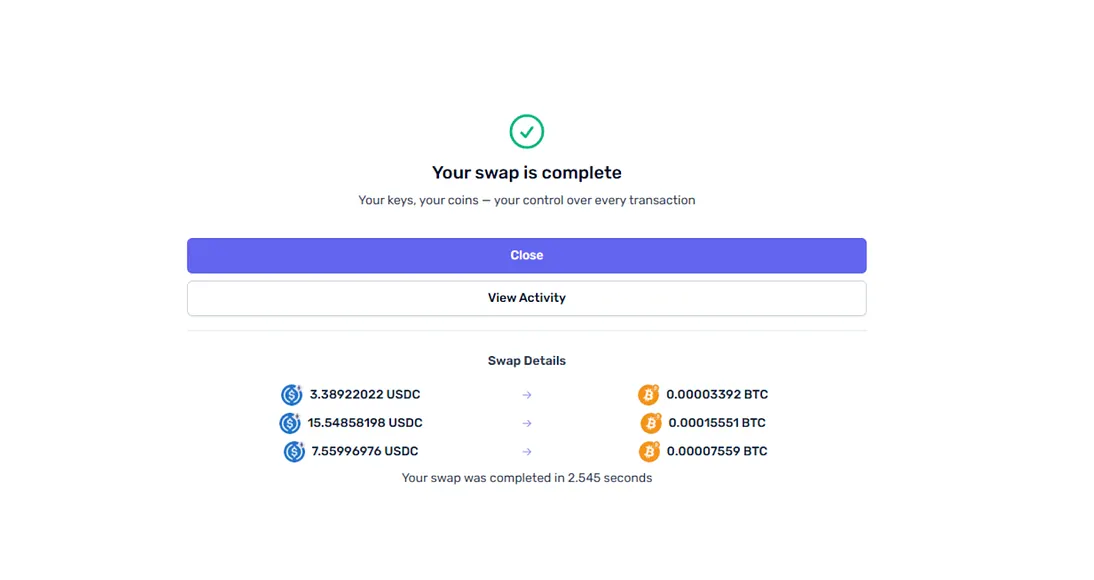
As stability improved, the Alpha group expanded. By February and March, more than 20 active testers were consistently pushing the platform in ways no internal team testing ever could. Swap success rates climbed above 99%, and swap execution times dropped below one second under ideal conditions. Not as a performance goal in itself, but as a consequence of eliminating bottlenecks and race conditions across the stack.
A large part of this progress would not have been possible without the Alpha testers themselves. Real users generated real-world conditions that no internal testing environment could fully replicate. Detailed bug reports, logs, and reproducible edge cases helped surface issues early and often, turning the Alpha phase into a collaborative stress test of the entire stack rather than a closed internal exercise.
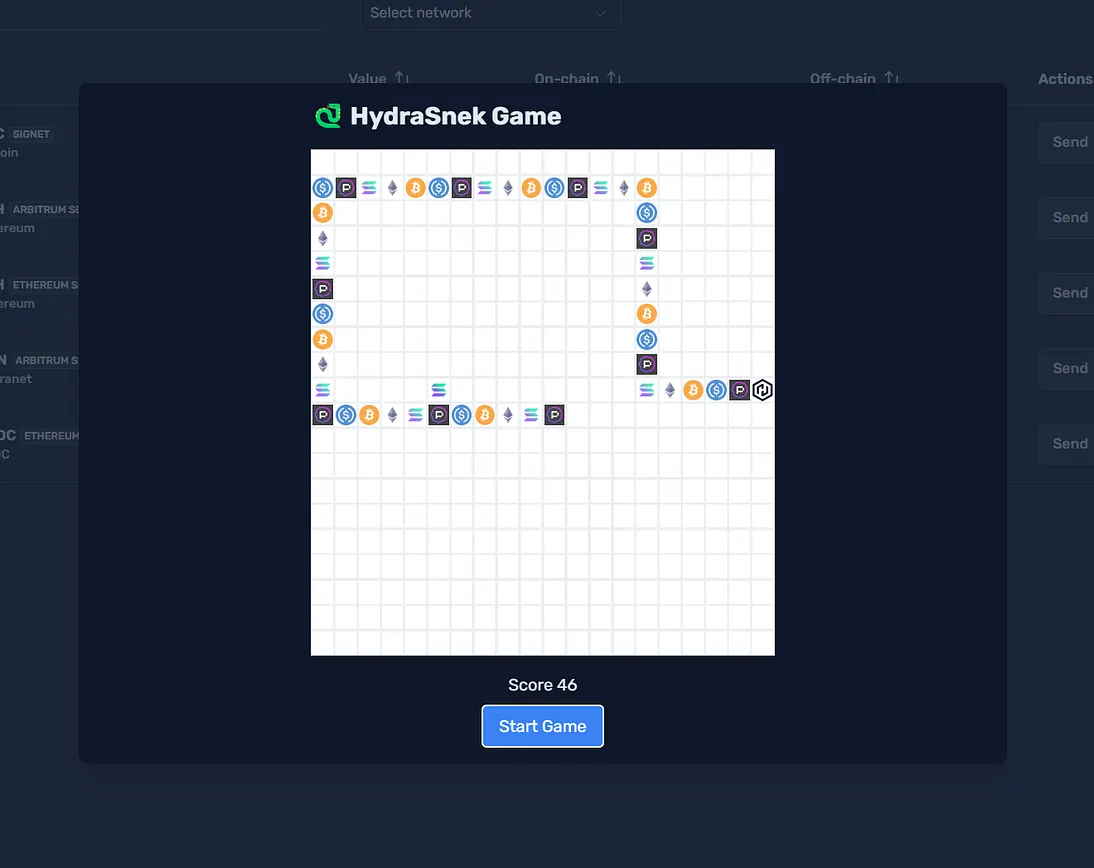
April arrived and the Alpha group saw 70 new participants joining. To make testing even more fun, the team hid a special easter egg inside the Web DEX: HydraSnek, a mini-game inspired by the classic Snake game, but with a Hydranet twist! 🐍
By May, this gradual expansion of testers and usage naturally led to the next step. The Alpha was opened publicly, allowing anyone to access the Hydranet Web DEX on testnet without invitations, registrations, or permissions. Rather than being framed as a launch, this marked an opportunity to expose the system to broader usage patterns and continue validating the off-chain infrastructure at scale.
During the Alpha phase, trading was intentionally limited to SimpleSwap mode only. The goal at this stage was not to validate the full interface or user experience, but to stabilize the off-chain layer itself. The priority was to ensure that off-chain nodes could operate reliably without crashing, that funds could be sent and received off-chain as expected, and that off-chain trades executed correctly.
Throughout this phase, development alternated between addressing bugs uncovered through testing and advancing new core functionality. This included continued work on the SimpleSwap logic, aimed to fully automate the entire trading flow, from opening state channels, through executing swaps, to closing channels once trades are completed. In parallel, a Liquidity tab was developed to allow users to add liquidity directly to the order book, laying the groundwork for more testing later on.
Despite reaching a swap success rate of over 99%, and while we, as a team, were eager to move forward quickly, it became clear that taking the next step in testing would require more time, time spent reinforcing the foundation before building further on top of it.
Lithium: from working protocol to stable backbone
If one component can be said to define Hydranet, apart from the complete network itself, it is Lithium. While often described as an off-chain protocol, Lithium is more accurately the backbone that enables Hydranet’s off-chain trading model to function reliably across EVM-based blockchains. In 2025, much of the project’s progress can be traced back to the continued development and stabilization of this protocol.
During the second half of 2024, Lithium reached its second major iteration with the introduction of multi-hop functionality. This allowed transactions to be routed through two or more off-chain nodes within the network, a prerequisite for decentralization and scalable routing. Early 2025 then brought Lithium V3, an important milestone that introduced independent asset channels and parallel processing of the channels. In practice, this meant that channels holding different assets could now be updated simultaneously. This was indeed a necessary step for enabling parallel swaps, another feature which reached our Alpha testers in early 2025. Alongside these functional changes, the third iteration of Lithium also saw a reduction in on-chain costs, achieving roughly a 10% decrease in gas usage for on-chain interactions.
From this point onward, the focus gradually shifted.
As the year progressed and Lithium was exposed to an increasing amount of testing — more testers, more usage hours, and a wider range of scenarios — development gradually shifted away from large functional changes toward incremental refinements based on user feedback. The core design was in place, but still required time in actual use to prove itself under load.
After crunching countless of reported bugs, Lithium V3.1 eventually made its way to the spotlight. Apart from refinements to off-chain logics and messaging, Lithium also gained support for batch operations, allowing multiple on-chain interactions to be lumped into a single transaction.
Behind the scenes, infrastructure supporting Lithium was also improved. The subgraph indexer was migrated from The Graph, whose infrastructure we had run into limitations with, to SubQuery, giving us greater control over scalability. Support was also expanded to additional token standards such as ERC721 and ERC1155, opening the door for NFT-related use cases.
By this point, Lithium had reached a stage where additional features no longer meaningfully reduced risk. The protocol itself was functionally complete, and development priorities shifted almost entirely toward resilience: identifying failure modes, improving recovery paths, and ensuring predictable behavior under load.
This phase was less visible from the outside, but critical for bringing Lithium closer to an auditable, production-ready state.
Beta: from demo to a product
While protocol work continued in parallel, 2025 also took the Hydranet Web DEX from a “simple” demo to a near-working product. The early Alpha phase allowed users to swap via the SimpleSwap UI and manually manage their channels prior to swaps. Acceptable for testing, but not sustainable beyond that. Hydranet is much more!
Throughout spring and early summer, the setup began to change. The SimpleSwap logic matured, enabling true one-click off-chain swaps that abstracted away channel management. The channel management tab itself was refined based on user feedback, while the Liquidity tab allowed users to place concentrated liquidity directly on the order book, bringing a more familiar DEX experience into an off-chain context. Multi-pair routing removed the limitation of direct trading pairs, allowing swaps to be automatically routed across multiple markets without fragmenting liquidity.
The final piece was the order book interface itself. Combined with Hydranet’s off-chain infrastructure, it delivered the trading experience we had been working toward: immediate execution without on-chain fees or delays, while users retained full control over their funds.
By July, with Alpha feedback addressed and the new core functionality stable, Hydranet transitioned into Beta. Beta introduced the full order book mode alongside SimpleSwap, zero-confirmation channel funding, EVM watchtowers, and a significantly improved frontend. While still explicitly a test environment, the development had crossed an important milestone!
The Beta phase would extend over a longer period by design. As functionality expanded and the system’s surface area increased, testing shifted from validating individual components and isolated functions to observing the full execution chain and real usage of the platform. Feedback from individual users, combined with periods of sustained stress testing, revealed a number of new edge cases, issues far better identified and addressed on testnet than after a mainnet release.
Governance, token, and necessary housekeeping
Not all progress in 2025 was technical. Several important but less visible decisions were made to reduce long-term risk and prepare for the future.
In April, the community approved and executed a token contract upgrade, removing the proxy-based HDN contract in favor of a standard ERC-20 implementation. While the proxy had served its purpose during early development, allowing for easier upgrades if changes had been required during the DEX’s formative stages, it created unnecessary warnings on token trackers and screeners.
The transition to the new contract was executed cleanly. The first transaction of the new HDN token was successfully distributed on April 14th at 06:23 UTC, completing two hours later. The distribution of the new HDN was successfully finalized at that point! Our uniswap liquidity pools were reopened shortly after the token distribution and MEXC resumed their services a few days later. All tracking pages such as CoinMarketCap, CoinGecko and Arbiscan were quickly updated too. And, to our joy, the proxy contract warnings vanished!
Alongside the token contract upgrade, a series of DAO proposals allocated funding from the DAO vault to support liquidity, development, and growth initiatives. These votes were deliberately structured into five consecutive proposals to remain compliant with Hydranet’s tokenomics. All five votes passed successfully, allowing for a release of funds from the Hydranet DAO Vault.
Thank you to everyone who took part in the discussions and votes! DAO governance is a key pillar of Hydranet, and your participation drives the project forward!
Visibility without distraction
While 2025 was not a year of aggressive promotion, Hydranet did increase its external presence selectively. We started early by joining and presenting live at International DeFi Day. Our very own Joe and Fedeparma took the stage and showcased Hydranet’s vision and roadmap, capping it off with a live demo featuring real-time BTC <> ETH off-chain swaps. Judging by the reactions, the hosts of the event had never seen anything like it, and to say they were impressed would be an understatement!
If you missed the event or want to relive this moment, you can rewatch the full International DeFi Day 2025 using this link, or skip to Hydranet’s showcase here.
The following month, Walleye and Max from Hydranet joined Upsid3rs_0x for a live X Space discussion covering our project. It was a fruitful one hour-session about our technology, roadmap, DAO, decentralization, and more. If you missed it, you can catch the replay here: Upsid3rs X Space.
In July, the team also expanded with the addition of Mito, who joined as Social Media Manager and later took on the role of Marketing Manager. With prior experience in growing and engaging crypto communities, Mito quickly began strengthening Hydranet’s external communication and day-to-day presence across our social channels. You may have noticed a change in tone and activity around that time.
This was followed in early August by the release of a feature video introducing Hydranet as the off-chain trading layer. The video saw strong engagement and brought increased visibility to the project. Here’s a link if you would like to give it a view.
A smaller Telegram beta campaign targeting South Asia was also conducted, and the results showed clear interest in Hydranet and what we’re building. The same month, our Beta Stats Dashboard also went live allowing anyone to follow Hydranet’s activity in real time. Swap volumes, the number of unique traders, collected fees, and more is visible here. It’s the perfect way to keep track of how the DEX is performing and expands!
Later in the year, preparations were made for attending Token2049, with a clear focus on articulating Hydranet’s role as an off-chain trading layer rather than a conventional DEX. With Token2049 approaching, the team spent time refining how the project is presented in person, from deciding which conferences and side events to attend, to preparing the materials needed to communicate Hydranet’s vision clearly and consistently such as business cards, leaflets, pitches, and more. The attendance generated new leads of which we are still in contact with today.
2025 was also the year of evolved communication. After more than three consecutive years of weekly updates, communication shifted toward milestone-based communication. We are indeed closing in on mainnet and can’t reveal details in all haste.
Closing words
Looking back at 2025, it was not about finishing Hydranet, it was about earning confidence in the product before it’s time to hit the big drum. Through Alpha, public Alpha, and Beta, the infrastructure we’ve built was tested, broken down, rebuilt, and tested again. Lithium matured. UX was refined.
As Hydranet moves into 2026, priorities are clearly defined. The focus will remain on completing audits, finalizing mainnet readiness, and transitioning from testnet validation to real economic activity. Rather than expanding the scope, the emphasis will be on execution, reliability, and carefully chosen integrations that align with Hydranet’s role as an off-chain trading layer.
There is still work ahead. But as the year closes, Hydranet stands on firmer ground than ever before, not because of promises made, but because of the hard work of both developers and the community.
To everyone who tested, reported bugs, participated in governance, or simply followed along quietly: thank you. Your patience and involvement continue to shape what Hydranet is becoming.
We are looking forward to the next chapter. And remember, nothing will be as impactful as mainnet! We are getting there.
Happy New Year!